Fwd: Update: Aid Inside Syria, Darfuri Refugees in Chad


-


View this message in your browser.

Refugees International
  NEW THIS MONTH
  MAY 2015
1505Update Main.jpg

Aid Inside Syria: A Step in the Right Direction?

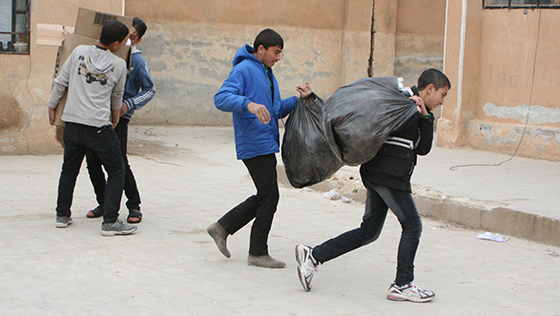
Providing humanitarian aid in a conflict zone is a challenge all over the world. But perhaps no situation has proved more complex than that of Syria. Every day, millions of vulnerable people across the country live with food and fuel shortages, homelessness, and an absence of vital medical care. Almost 5 million of those people are in places that are difficult for humanitarians to access. Syrian groups working inside the country have been able to offer some support in hard-to-reach areas and to a lesser degree in besieged areas where the United Nations and international non-governmental organizations do not send their staff.  But there needs to be far more focus on getting more and better humanitarian assistance inside Syria. Read the field report.

 
1505Update Blog.jpg

Darfuri Refugees Falling Through The Cracks in Chad

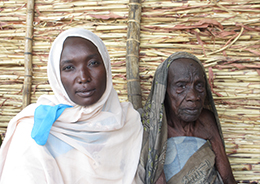
Twelve years after they first fled, refugees from Sudan's Darfur region are still stuck in eastern Chad. Chad is one of the poorest countries on earth, and the 360,000 Sudanese refugees live in some of its least developed regions. 

View the photo report.

RI in the News


  Advocates in Action

Watch For!

On Friday, June 5th at 11:00am ET, RI's Alice Thomas will be giving a back-from-the-field webinar on an ongoing but little known displacement crisis in the Philippines. Register here.

  • Alice Thomas attended an experts' meeting in Italy to draft international guidance for protecting people displaced by disasters and climate change through planned relocation. Alice contributed a case study from the Philippines in advance of the meeting highlighting the need to better protect those displaced by disasters whom governments decide to relocate.
1505Update Action.jpg
  • Sarnata Reynolds traveled to Oslo, Norway to present RI's findings on the situation of the Rohingya in Myanmar and participate in a closed-door strategy session with Rohingya leaders who traveled from 11 countries of exile for the meeting. Archbishop Desmond Tutu, Nobel Laureate José Ramos-Horta, and George Soros also participated in the conference.

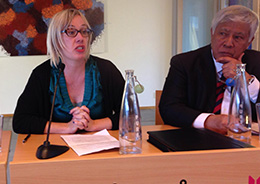
  • RI President Michel Gabaudan spoke about the Syrian refugee crisis and its particular impact on Turkey as part of a panel for the UN Association of the National Capitol Area at the Institute for Diplomacy. His co-panelists were Shelly Pitterman of the UN Refugee Agency and Nader Al Suhaim from the Embassy of Jordan.
1505Update footer.jpg

1505Update footer2.jpgdonate bar FtF.jpg
RI on facebook RI on twitter RI on YouTube

 Sign up to receive email from Refugees International |   

Copyright © 2015 Refugees International, All rights reserved.
2001 S Street NW, Suite 700 | Washington, DC 20009
Phone: 202.828.0110202.828.0110  | Fax: 202.828.0819 | ri@refugeesinternational.org


You'll need Skype CreditFree via Skype

Comments

Popular posts from this blog

[MigrantCause.com] Fwd: MAURITANIA: UN EXPERT WELCOMES NEW ANTI-SLAVERY LAW, SAYS EFFECTIVE ENFORCEMENT IS KEY

      Web version    New York  Aug 21 2015 1:00PM    UN News Centre with breaking news from the UN News Service  Special Rapporteur on Contemporary Forms of Slavery Urmila Bhoola. UN Photo/Jean-Marc Ferré (file) MAURITANIA: UN EXPERT WELCOMES NEW ANTI-SLAVERY LAW, SAYS EFFECTIVE ENFORCEMENT IS KEY While applauding the adoption of a new anti-slavery law in Mauritania that doubles, from 10 to 20 years, the maximum prison...

John Major praises 'guts and drive' of immigrants in the UK

John Major praises 'guts and drive' of immigrants in the UK Comments: Mr John Major  is right about migrants in the UK and worldwide. Most of  migrants  leave their countries as asylum seekers fleeing persecution, lack of freedom and human rights abuses. Other leave their countries just to look for new opportunities. Arriving in the new countries such as UK , they work hard to survive. In most cases they have left their families and relatives. They have to share their earnings with the people their left behind and to support the education of their relatives.  They live in disadvantageous situations because they  are not  in the same situation like the British people who  have families that  help them to set up a business for example, pay their education, help them to raise funding or to get a bank loan, to inherit houses and other assets. They face institutional discrimination because most of the...

[New post] Daily News and Updates from ReliefWeb 01/29/2016

Paul V Dudman posted: " OECD and UNHCR back increased refugee integration - World | ReliefWeb via ReliefWeb Headlines http://reliefweb.int/ tags: IFTTT Feedly ReliefWeb " Respond to this post by replying above this line New post on Refugee Archives @ UEL Daily New...